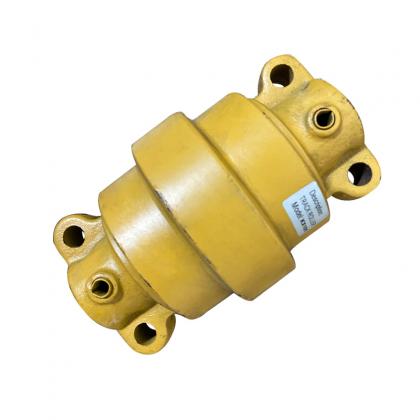
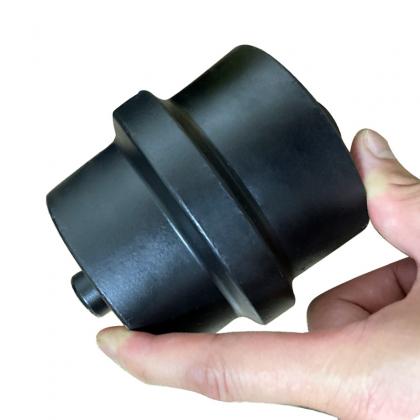
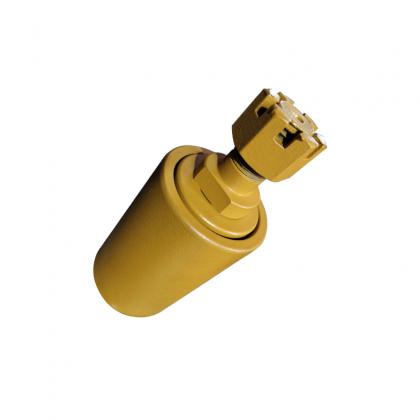
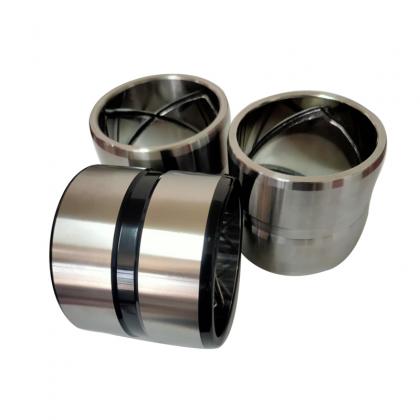
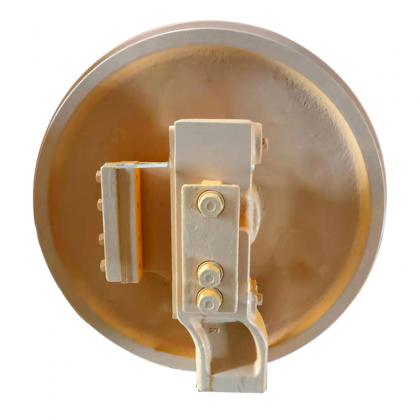
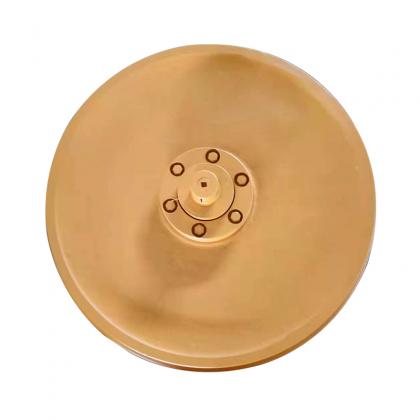
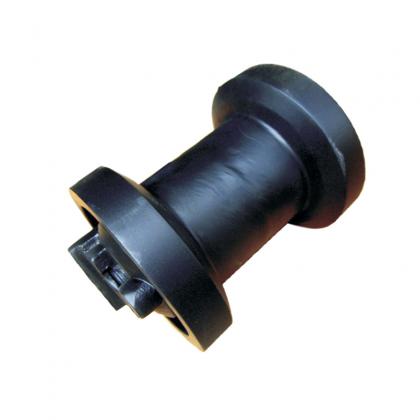
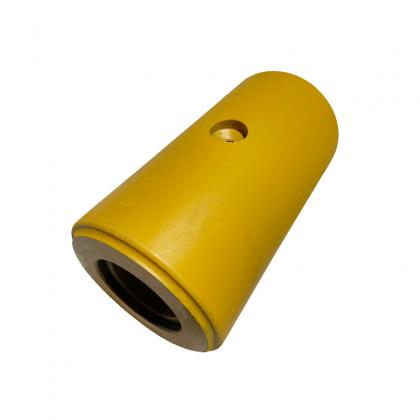
Quanzhou Peers Construction Machinery Parts Co., Ltd. It is a leading manufacturer of undercarriage Parts for earthmoving equipment, today released a comprehensive operational bulletin aimed at helping equipment owners and operators maximize the lifespan of track front idler wheels on bulldozers and excavators. With field data showing that premature idler failure accounts for nearly 18% of undercarriage downtime, the factory urges users to adopt daily best practices that significantly reduce wear and tear.
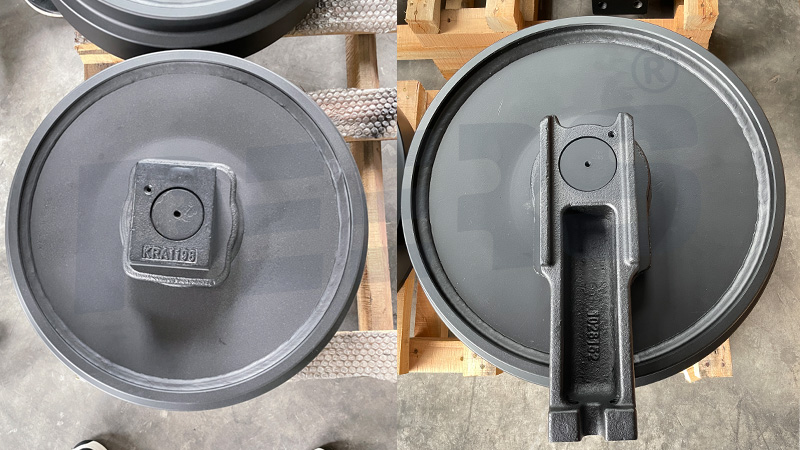
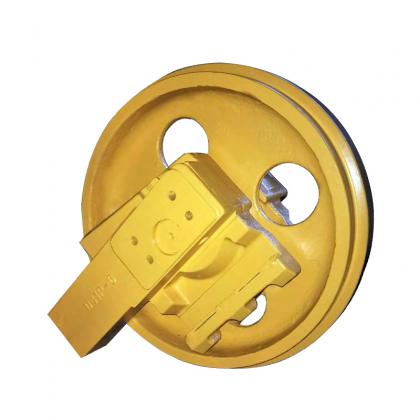
The idlers(roller forging idler wheels) – often called the front idler which plays a critical role in maintaining proper track tension, guiding the track links, and absorbing impact loads. When neglected, it becomes a costly point of failure. Based on decades of manufacturing experience and failure analysis, PEERS outlines the following key strategies to improve idler longevity.
1. Maintain Track Tension on time Over-tensioning is the number one killer of front idler rollers. When tracks are too tight, the idler bearing and bushing suffer excessive radial loads, leading to premature fatigue, cracking, or seizure. Conversely, loose tracks cause the chain to slap against the idler, accelerating flange wear and distorting the wheel rim.
No.1. Daily check: With the machine parked on level ground, measure the sag between the track carrier roller and the idler roller. For most excavators, 20–30 mm of sag is ideal; for bulldozers, 30–50 mm depending on model.
No.2 Adjust gradually: Always follow the manufacturer’s pressure specifications when greasing the tensioner. Over-greasing is as harmful as under-greasing.
2. Keep the Idler Area Clean Idler wheels work in the harshest environments – mud, sand, gravel, and slurry. When debris builds up between the idler and the track links, it acts like lapping compound, grinding down the idler’s tread and the link faces.
No.1 End of shift cleaning: Use a pressure washer or a scraper to remove compacted material from the idler pocket, the track link recesses, and around the idler mounting brackets.
No.2 Avoid standing water: Whenever possible, do not leave the machine parked in water or slurry overnight. Prolonged immersion forces moisture past the idler’s floating seals, causing lubricant contamination and corrosion.
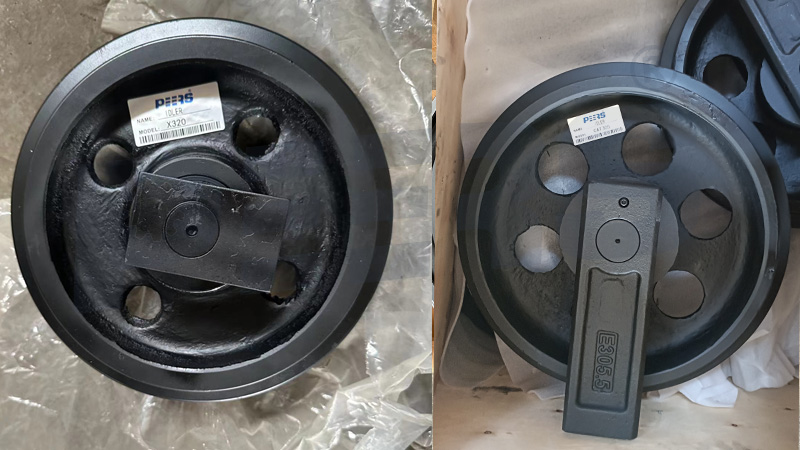
3. Inspect Seals and Lubrication Weekly Most modern idler wheels are permanently lubricated with oil or grease and rely on metal-face seals (Duo-Cone or similar). A single seal failure leads to lubricant loss, by bearing burnout within hours of operation.
No.1 Look for leaks: After work, inspect the area behind the idler – oil streaks or wet dust indicate seal damage. Grease-packed idlers will show dried, crumbly grease if seals fail.
No.2 Listen for noise: A grinding or clicking sound from the idler while the track rotates signals bearing or seal failure. Stop operation immediately and replace or rebuild the idler.
No.3 Check the breather (if equipped): Some idlers have a pressure relief valve. Ensure it is not clogged, otherwise internal pressure can blow the seal.
4. Monitor Track Link and Sprocket Condition Worn track links alter the pitch length, causing the chain to “climb” the idler unevenly. This generates abnormal point loads on the idler’s tread, leading to localized cracking or chunking.
No.1 Measure link wear: Use a track-wear gauge weekly. When link height has reduced by 5–7 mm, the entire undercarriage should be evaluated.
No.2 Replace components in sets: Mixing new tracks with a worn idler (or vice versa) accelerates failure of both. Always match wear life.
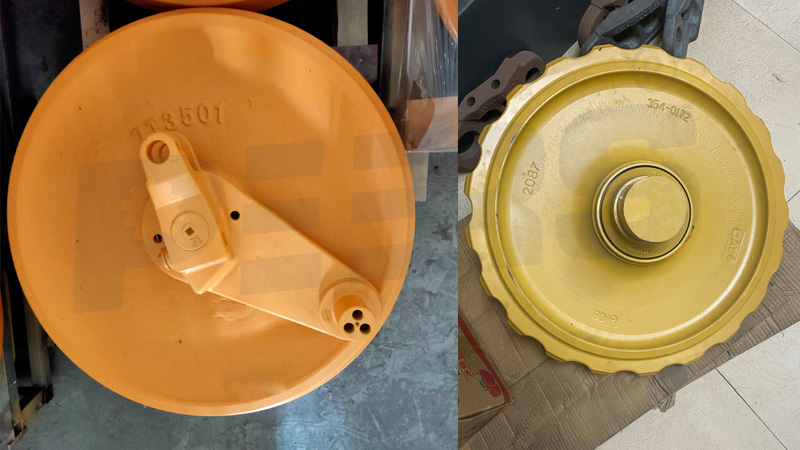
5. Avoid Impact Loading and Abusive Operation Idler wheels are robust, but not indestructible. Running over large rocks, stumps, or demolition debris at speed transfers shock loads directly to the idler shaft and bearings.
No.1 Slow down over obstacles: Reduce travel speed when crossing uneven terrain.
No.2 Do not use the idler as a pushing point: Some operators ram the idler against a bank to push material. This bends the idler guard and can crack the mounting yoke.
No.3 Reverse carefully: When backing up, sharp turns with the track under tension can peel the idler flange. Always perform gradual turns, especially on hard surfaces.
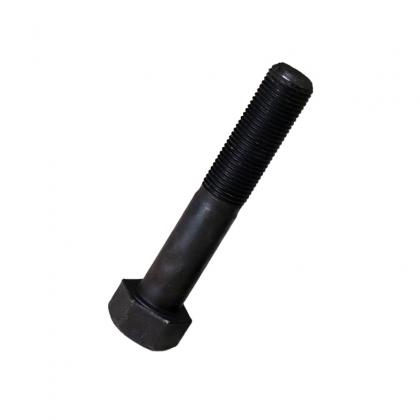
6. Perform Regular Bolt Torque Checks The idler is held by two or four mounting bolts (or a yoke pin). Loose bolts allow the idler to shift, misaligning it with the track chain. This causes one-sided flange wear and eventual breakage.
No.1 Torque schedule: Check bolt tightness every 250 operating hours. Use a calibrated torque wrench and follow the pattern recommended in your machine manual.
No.2 Inspect bolt holes: Stripped threads or ovaled holes in the track frame require immediate repair; otherwise, no bolt can hold the idler stable.

WhatsApp : +86-15060986377
Correo electrónico : nick@peersparts.com
Correo electrónico : info@peersparts.com
Skype : nick.huang13