Everyone knows that bucket teeth are the front-line parts that directly affect your equipment's efficiency and profitability. Right selection, coupled with disciplined operational practices, can save cost and reduce unplanned downtime.
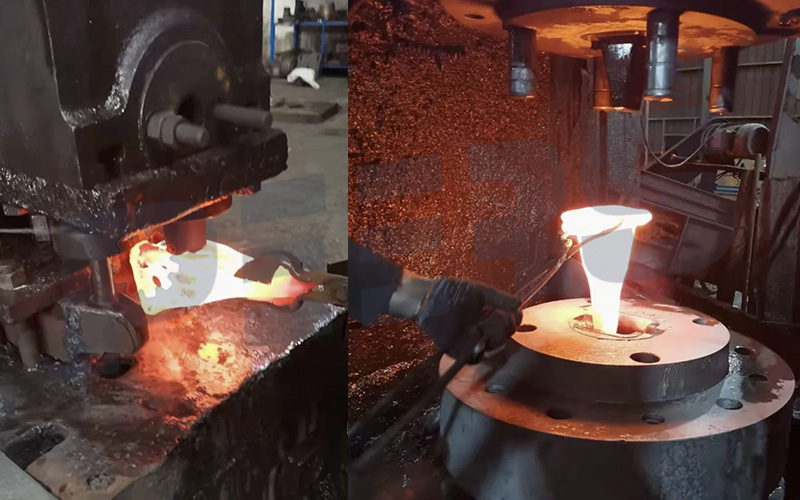
To maximize the performance and lifespan of your bucket teeth, we recommend the following guiding principles:
1. Select the correct tooth type for your application. Pointed(RC) or chisel-type teeth(TL) are better for hard rock and compacted soils, as its flared designs (like tiger teeth) are ideal for loose materials such as sand and coal. Using the wrong shape increases digging resistance and wastes time and fuels.
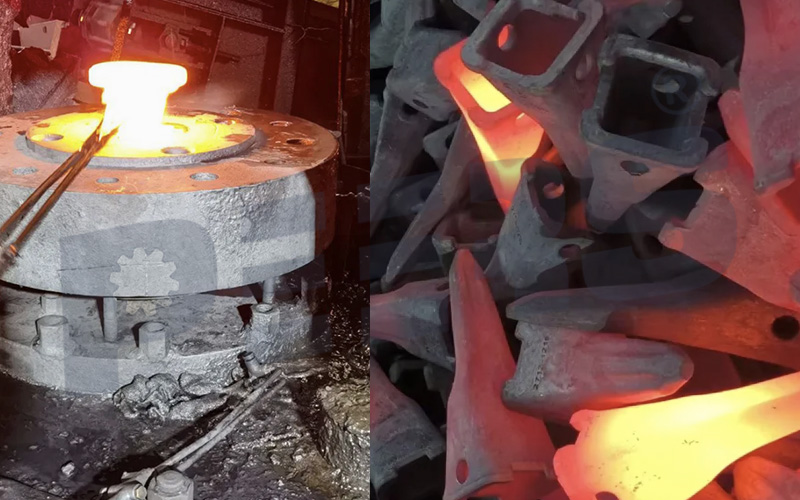
2. Daily visual inspection on the teeth bucket. Look for worn tips, bent shanks, or loose retaining pins. As the tip wears down, the cutting edge becomes blunt, requiring more hydraulic force. Replace individual bucket teeth when the wear land exceeds 30% of the original length it is really important and necessary.
3. Implement a rotation schedule. The corner teeth often wear up more faster than those in the center. By swapping outer teeth with inner ones at regular intervals, you can achieve uniform wear and extend the entire set's life.
4. Maintain optimal digging angles. Avoid attacking the ground at an excessively steep or shallow angle. A nearly vertical penetration minimizes side loading and stress on the tooth base, reducing the risk of breakage.
5. Understand that hardness is not the sole criterion. While a hardness of 48–52 HRC is desirable for abrasion resistance, excessive hardening makes teeth brittle. 6. There have two types of bucket teeth on the market. Cast one and forged one. They are also very common to use in the present market.Forged teeth offer an ideal balance of hardness and toughness, thanks to their refined grain structure.
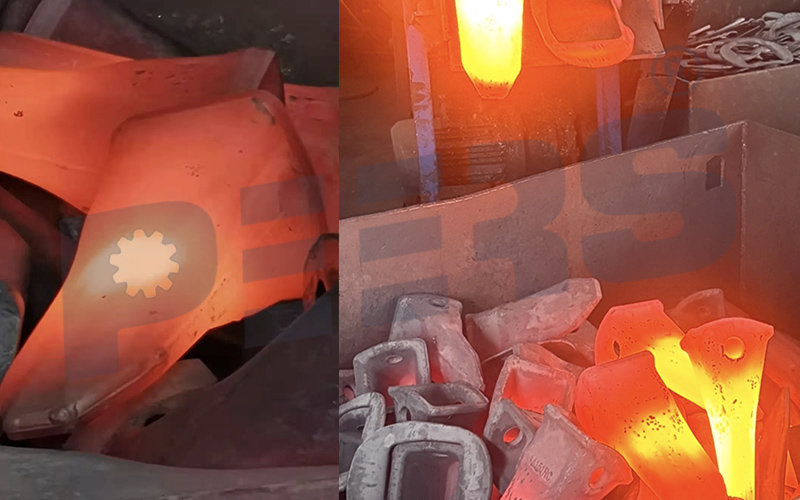
Forged teeth are produced by heating a solid steel billet and applying tremendous pressure to shape it within a die. This process refines the internal grain structure, eliminates porosity, and creates a continuous flow of material, resulting in exceptional impact strength and wear resistance. and Cast teeth are formed by melting scrap or raw metal and pouring it into a sand or ceramic mold. While this approach lowers initial tooling costs, it often introduces microscopic voids and a coarse, dendritic structure, making the teeth more susceptible to cracking and accelerated abrasion.
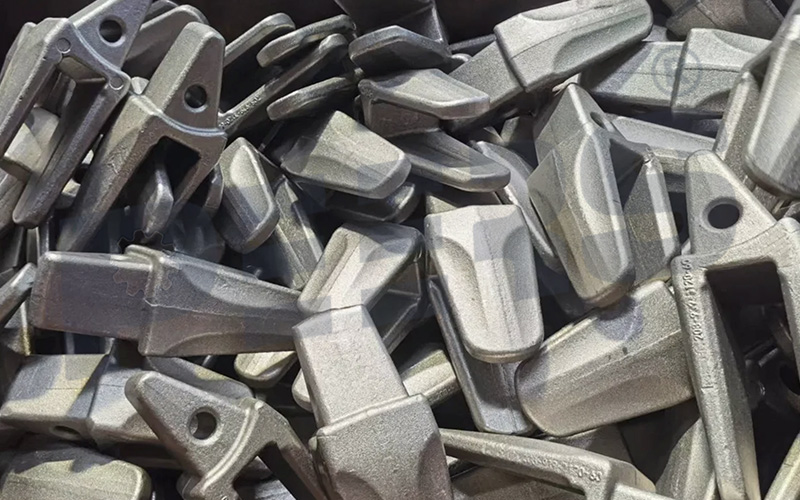
So forged teeth typically cost 1.5 times more than cast equivalents, they offer twice the service life, delivering a significantly lower total cost per ton of material moved.By combining the right manufacturing choice—forged teeth for demanding conditions—with these operational best practices, you can significantly boost your excavator's productivity, lower fuel consumption, and minimize replacement costs.
Our commitment to quality ensures that our forged teeth meet the highest standards, giving you peace of mind on every job site.

WhatsApp : +86-15060986377
Correo electrónico : nick@peersparts.com
Correo electrónico : info@peersparts.com
Skype : nick.huang13